- Every movement counts. What matters is the total over the day, not a single perfect workout.
- Short bursts of activity can reduce tiredness and tension at work, especially if you plan them regularly.
- The easiest way to achieve this is to link movement to fixed triggers, for example: phone rings - then stand up briefly.

Movement easily integrated into everyday life
05. March 2026
Brief overview
Why everyday exercise can be so effective
Many people associate exercise with sport. However, every form of physical activity counts for the body, including walking to the bus stop, climbing stairs or standing up briefly between two tasks. The WHO recommends that adults do either 150 to 300 minutes of moderate-intensity activity or 75 to 150 minutes of higher-intensity activity and strength training on at least two days a week (World Health Organization, 2020). If that sounds a long way off at the moment, a change of perspective will help: you don’t have to do everything at once. You can accumulate exercise in very small portions throughout the day.
A second point is sitting. Many office jobs involve long phases without interruption. In a systematic review of interventions for office workers, sitting time at the workplace was reduced on average by about half an hour per workday when measures were combined, for example environmental changes and motivational elements. This is no guarantee of specific health effects, but it shows that small changes are realistic.
Three principles that almost always work
Start small, stay feasible
Choose a measure that can be implemented in less than two minutes. Examples: get up once an hour, take an extra flight of stairs, walk briskly for two minutes. The lower the barrier to entry, the more likely it is to become a habit.
Frequently instead of rarely
Several short phases of exercise are often easier to incorporate into everyday life than one long block. Short breaks can also improve subjective well-being and energy levels during work.
Couple to trigger
Habits arise when a trigger reliably leads to a behaviour, and triggers such as appointments, emails or coffee breaks are particularly suitable for everyday life. A simple plan: trigger occurs, movement prompted. If-then plans like these enable people to stay on track.
Movement in the office
The office is not about sport, but about changing positions and short bursts of activity. The aim is to interrupt sitting on a regular basis. Use the following ideas as a building block and select those that suit your day-to-day working life.

Micro-breaks that can be implemented immediately
- Stand up and take two deep breaths, consciously lower your shoulders backwards
- Walk around the table or to the printer once, even if this only takes 30 seconds
- Standing calf raises, 10 to 15 repetitions
- Gentle mobilisation: slowly turn your head to the right and left, then look up and down
- Short stretch: place your hands on the wall, open up your chest and hold for 20 seconds
Alternatively, fixed triggers can help, e.g. standing up briefly or taking a few steps after each meeting.
Take the stairs instead of the elevator
Stairs are an easy way to bring intensity into everyday life. If you usually take the elevator, start by walking one floor and only increase once it feels comfortable. Very short, more intense bouts of daily activity have been linked to positive health indicators in observational studies. It is important to put this into context: these are associations, not proof of cause and effect.
Ergonomics as a movement aid
- Place work materials so that you have to get up more often, for example, keep the printer or folders away from your desk
- If possible, stand or walk slowly during telephone calls
- Choose a deliberately small water bottle so that you can top up more often
If you use height-adjustable workstations, make sure to switch positions regularly and take breaks. Standing for long periods of time is not automatically better than sitting for long periods of time.
Get more exercise while travelling
Going by foot instead of always using public transport
- Get off one stop earlier and walk the rest of the way as quickly as you can
- Consciously choose stairs in railway stations, even if an escalator is available
- Walk short distances in the neighbourhood, for example to the post office or to go shopping
If time pressure is an issue, plan micro-walks: two to five extra minutes are often enough to noticeably increase everyday movement.
Bike-friendly planning
Cycling is a very efficient way of integrating exercise. Those just starting out benefit from a simple rule: better to do short sessions more often than long sessions infrequently. Choose routes that you are confident with and increase the distance in small increments.
At home without having to plan in additional time
Everyday life at home offers plenty of opportunities for movement without making your day even longer. It is important to make a conscious decision to actively complete small tasks.
- Make phone calls while standing or during a short walk
- Use waiting times: when the water is boiling, stand up briefly and mobilise your hips
- Use the household as your centre of activity: consciously walk more briskly, incorporate two flights of stairs
- Evening routine: two minutes of relaxed stretching after brushing your teeth

How much is sensible - and when is it too much?
For everyday life, the perfect number is less important than a stable, gradual increase. Use two signals as a guide:
- Recovery: do you feel generally refreshed the next day ?
- Load: are you more aware of your joints and muscles after exercise, but they are not significantly strained?
If discomfort increases or feels sharp, stabbing or unusual, reduce the duration and intensity and seek medical advice if necessary.
Practical planning tips
- Start week: introduce just one new habit, for example getting up once every hour
- Increase: increase only one element per week, for example an additional flight of stairs or an additional walk
- Regeneration: sleep and breaks are part of performance. Deliberately plan quieter days
Even on days with little energy, a very short, gentle exercise session can be useful, for example a five-minute walk. The WHO emphasises that every activity counts and that exercise can also be accumulated in small portions.
Routines that endure
The three-step plan
- Select a trigger: for example, coffee, end of meeting or sending an e-mail
- Define a mini-action: stand and walk for 60 seconds
- Make it visible: a tick in the calendar or a short note
Research on habits emphasises that repetition in a stable context is key. This means: better to do the same small action every day than infrequent, large endeavours.
Checklist for the next week
- I use the stairs at least once a day in addition
- I take three micro-breaks per working day
- I walk a minimum of one short distance on foot each day, for example to the bus stop or to do some shopping
- I plan a short evening walk on two days each week

Explore the range
Natural products for muscles and joints
Discover the Pernaton range of massage gels and nutritional supplements to support muscles and joints – for more fun with exercise.
Your health
Tips for muscles, joints and movement
Useful knowledge and practical tips about muscles and joints – for active self-care, greater mobility and quality of life.
-

Keep moving. With the power of nature.
Discover the new, improved product range from Pernaton. With the familiar natural strength you already know.
Read more -

Everyday nutrition for muscles and joints
Nutrition tips focussing on muscles, bones and joint function, including snack ideas.
Read more -
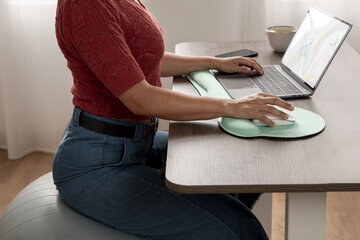
Everyday ergonomics
A clear overview of sitting, desk work and typical poor posture, with specific tips for day-to-day work.
Read more


Social media